Who I Am
Most people are surprised when they work with me.
…that trauma therapy isn't nearly as awful as they expected.
…or that I'm a lot less "therapist-y" than they imagined.
I probably don't fit most people's image of a therapist.
I'm not particularly interested in pretending I've got life figured out. Human beings are messy, contradictory creatures. We say we want one thing and then do another. We repeat patterns we swore we'd never repeat. We overthink text messages, argue with ourselves internally, ignore our own advice, and wonder why we keep ending up in the same places.
I've done it too.

I've made mistakes, had existential crises, breakdowns, argued with myself, ignored my own advice, and generally participated in the full human clusterf*ck.
You will never find judgment from me. You will find a new perspective, though.
People often come to therapy convinced something is wrong with them. What I've learned is that most people make far more sense than they realize. Once we understand the context, the history, and the adaptations that got them here, things that once felt confusing often become surprisingly understandable.
You might find me asking questions you've never considered before or suggesting tools that seem a little woo-woo.

I’ll only ask you to go through the motions if I am fully confident it will move something.
The work we do is serious, but not a buzzkill.
Some of my younger clients tell me they expected therapy to be a depressing bummer. They’re often surprised that we laugh as much as we do.
Most of my older clients tell me they wish they had started years sooner. They didn’t believe they could actually set the weight down.
This work can be rough sometimes.
It can also be funny, weird, surprising, and occasionally absurd.
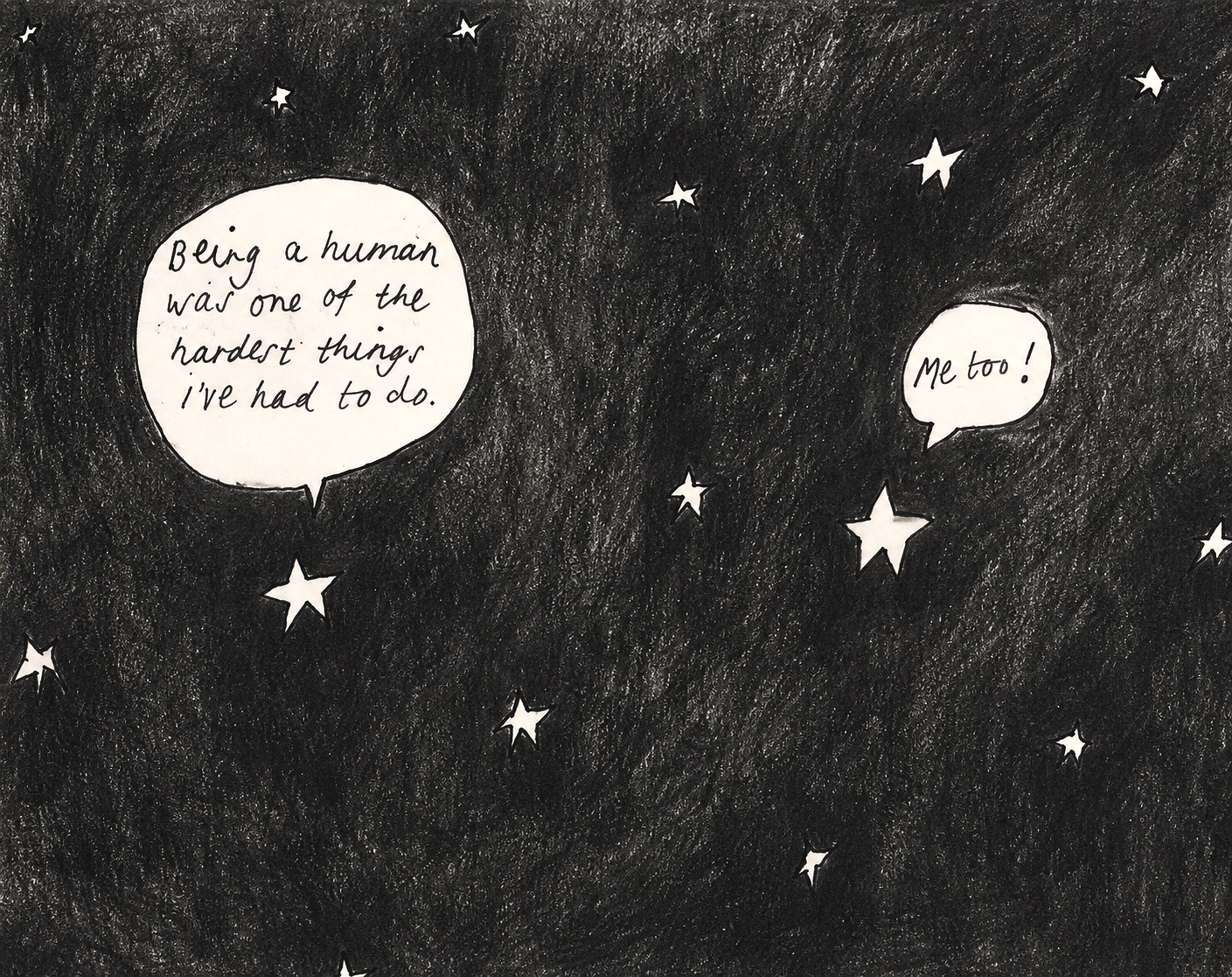
Kind of like being human.

“ The most important parts are usually hiding underneath the story we're telling ourselves. ”

Why I Do This
I've always been fascinated by what sits underneath the obvious explanation.
The panic attack isn't usually about the flight.
The perfectionism isn't really about getting things right.
The affair isn't about the desire.
The most important parts are usually hiding underneath the story we're telling ourselves.
The more I learned about trauma, dissociation, memory, attachment, and the nervous system, the more I realized that symptoms often aren't the problem. They're adaptations - Intelligent responses to experiences, environments, and situations that once required them.
That realization changed the way I see people.
Instead of asking, "What's wrong here?" I started asking, "Why did this start in the first place?"
Some therapists love symptom management.
Some love diagnosis.
I love puzzles.
The more complex, contradictory, confusing, and "I've already tried everything" a situation is, the more interested I become.
I'm endlessly curious. I pay attention to patterns. I notice inconsistencies. I ask weird questions. I follow threads.
Eventually something starts making sense.
It's one of the reasons therapists, psychiatrists, physicians, and other professionals often refer people to me when they feel they've run out of explanations.
Most of the time the answer is more complicated than any single diagnosis, behavior, or life event.
What interests me is understanding how the pieces fit together—and helping people make sense of experiences that have felt confusing, contradictory, or impossible to explain.

How I Ended Up Here
Therapy wasn't my first, or second career.
Before entering the mental health field, I spent years grinding in fitness and wellness, leadership and management roles - working with people, solving problems, navigating conflict, learning how complicated human behavior can be and how everyone needs a bit more help than I was in a position to give them.
Those experiences inspired me to this work and shaped the way I practice today.
I understand what it feels like to carry the weight of responsibility, make difficult decisions, manage competing demands, fail miserably, and try to keep moving forward while struggling with something underneath.
When I made the decision to pursue therapy, I wasn't just interested in counseling and listening. I wanted to find a way to actually unburden people from the heaviness they all seemed to carry in their own unique ways.
I didn’t come to this work because therapy changed my life…
Ironically, it was almost the opposite.
Long before I became a therapist, I had already spent years trying to feel better myself. I did what everyone tells you to do. I went to therapy. More than once.
Talking helped. Being understood helped. But my life didn't actually change very much.
And, not to name names, but one therapist fell asleep during our session...twice. Honestly, I’m not even a little boring, but fine.
Eventually I came to the conclusion that maybe therapy just wasn't capable of doing what I needed it to do.
So I went back to relying on myself, as usual.
I read every book I could get my hands on, attended workshops about healing and surviving as an empath, moved across the country more than once, journaled until my hand cramped, and became exceptionally insightful...and exceptionally exhausted.
I understood myself better than ever, I just didn't feel any lighter.
Not only had I failed to think my way into healing, I'd added something new to carry - the guilt that I couldn't seem to fix myself despite all my hard work.
The upside is that I'm one of those people who becomes relentlessly curious when something doesn't make sense. If something isn't working, I don't tend to accept it—I go looking for what’s been missed.
That curiosity eventually led me well outside the way therapy is traditionally taught and into advanced training that fundamentally changed how I understood why certain things stay with us, where it’s stored, and how we can let it go.
Along the way, I met the mentor who shaped my career, and life really, more than anyone else. Among the many things she taught me, she all but dragged me into working with a somatic therapist myself.
She knew something I didn't yet understand - that if I was ever going to heal my own sh*t—or help anyone else heal theirs—I had to stop trying to outthink and micromanage my nervous system.
She was right. Don’t hate the player, as they say.
Big Questions, Real Impact.

Once I entered the field, I quickly found myself drawn toward the kinds of cases that made other clinicians nervous.
I never considered trauma something I would I would seek out, but I quickly noticed that these were the cases I did best with.
The usual explanations and tools always felt incomplete.
Many approaches were asking people to think their way out of problems that had nothing to do with their thinking brain.
I wanted to understand trauma more deeply. Dissociation more deeply. Memory, behavior, adaptation, and resilience more deeply.
While building my private practice, I worked in community mental health, residential treatment, partial hospitalization, and intensive outpatient programs specializing in trauma, addiction, dissociation, and complex mental health presentations.
I worked alongside exceptional clinicians and mentors while treating individuals with severe trauma, chronic dissociation, and some of the most complex cases that show up in mental health settings, such as Personality Disorders and Dissociative Identity Disorder.
The work was demanding, humbling, and endlessly educational.
It taught me that people are far more adaptive, resilient, and complicated than diagnostic labels suggest, and that our brain’s ability to adapt to survive is more brilliant than we can possibly understand.
The Evolution of My Work

Over the years I've pursued extensive advanced training in EMDR, somatic therapy, parts work, Trauma-Sensitive Yoga, attachment, dissociation, and integrative trauma treatment.
I still spend a significant amount of time studying, training, consulting, and refining my work.
What keeps me engaged isn't collecting certifications. Anyone can hop onto Canva and write up their own bright shiny certificate.
It's the recognition that human beings rarely fit neatly into theories.
Every client teaches me something.
Every training challenges something.
I’ve come to understand that the moment you think you’ve cracked it, that you’ve mastered the craft, that you know the way someone else’s life should look…you’ve missed it. And in that case, you’ve probably missed them.
Our understanding of trauma, memory, the brain, the body, and human behavior keeps evolving—my work continues to evolve with it.

Today, in addition to private practice, I also provide supervision, consultation, and training for therapists working with complex trauma, dissociation, nervous system dysregulation, and treatment-resistant cases.
I enjoy helping clinicians think through the same kinds of puzzles that first drew me into this work.
We slow down. We question assumptions. We look for what has been has missed.
I approach supervision the same way I approach therapy—with curiosity, humility, and the belief that the best answers usually emerge from understanding the whole person rather than forcing them into a model.